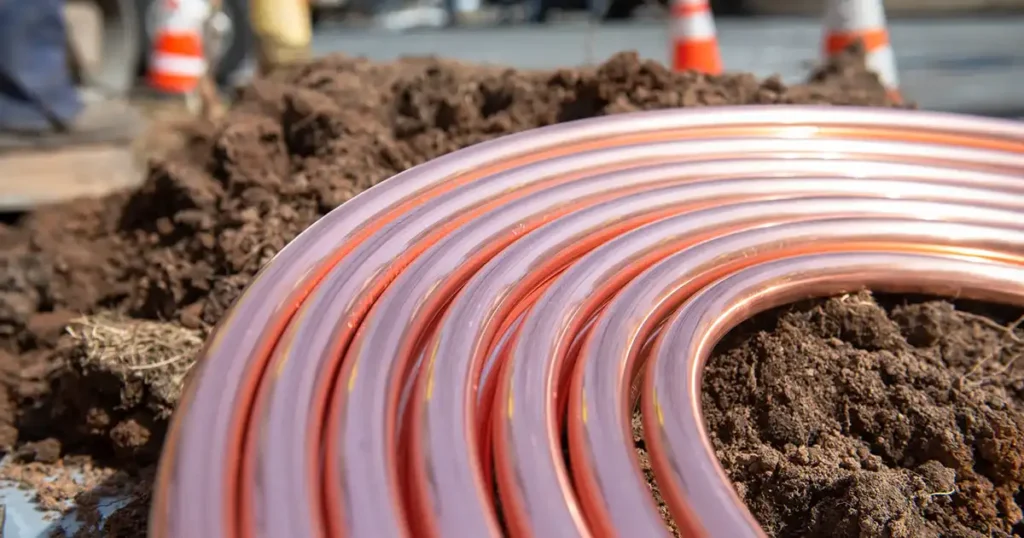
Pipes that connect a water main to a building or dwelling. Service lines can be made of many materials, such as copper, galvanized steel, plastic, and lead, and are typically 2 inches or smaller in diameter. The service line is typically split into a public side and a private side section of pipe, in which the two sections are separated by the water meter that measures the flow of water into the building. The public side is typically owned by a water utility, responsible for maintaining and replacing service lines. The private side is owned and maintained by the homeowner or business owner. For some water systems, the homeowner or business owner may be responsible for the entire service line between the building/dwelling and the utility-owned water main.
- Activate the CommunityProvide communities with the education and tools needed to communicate their perspectives effectively and participate in decision-making processes.
- Break Down Barriers and Streamline ProcessesEnact legislation that removes legal, financial, and logistical barriers to full lead service line replacement to support water utilities implement efficient, equitable, and scalable programs.
- Commit to Action: Set Goals to Eliminate Lead PipesDemonstrate strong leadership by setting a clear goal to eliminate all lead pipes in your community.
- Commit to Action: Set LSLR Timelines and GoalsEstablish strong leadership and set a goal to eliminate all lead service lines in your state.
- Community Engagement in Denver, CODenver Water is a national model for lead service line replacement and has one of the most comprehensive programs in the country, designed to replace all lead service lines in Denver Water’s service area over the course of 15 years.