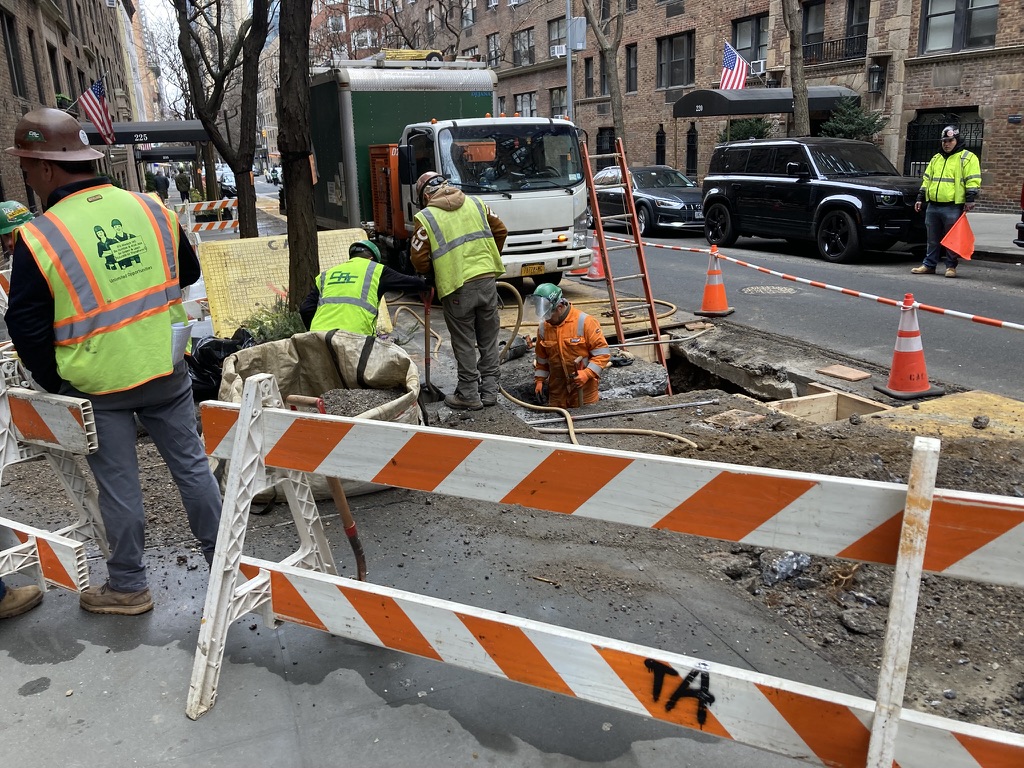
Invasive Solutions

Methods that involve excavation or other physical intervention to access a service line or other pipeline, typically to identify material type or replace the asset. In the context of lead service line replacement (LSLR), invasive solutions may also include techniques that require accessing the interior of the service line to determine its material. These approaches are contrasted with non-invasive solutions, which do not disturb the physical infrastructure.

« Back to Glossary


Share
Recent Resources

Funding and Financing Options for Full Lead Service Line Replacement

Revolving No More: How Earmarks Undermine Funding for Water Infrastructure

Breaking Barriers to Lead Service Line Replacement in New York

Milwaukee is one of the few cities in the country with a prioritization plan to ensure neighborhoods likely to suffer the most severe impacts from lead poisoning get their pipes replaced first. In consultation with a community-based group, Coalition for Lead Emergency (COLE), and following a public engagement process, Milwaukee included in an ordinance three indicators to prioritize where LSLs will be removed first:

  1. The area deprivation index (ADI), which is a compilation of social determinants of health
  2. The percentage of children found to have elevated lead levels in their blood when tested for lead poisoning
  3. The density of lead service lines in the neighborhood.

Read more here.