Rationale for Utilizing Predictive Modeling to Identify Lead Service Lines
New Jersey DEP’s Division of Science and Research examined whether predictive modeling is as effective as other methods to locate lead service lines.



New Jersey DEP’s Division of Science and Research examined whether predictive modeling is as effective as other methods to locate lead service lines.

This webinar explores strategies for overcoming the unique challenges of lead service line replacement in rental properties, including legal, logistical, and communication barriers.

This tool highlights Philadelphia Water Department’s Tiered Assistance Program (TAP) as a model affordability program (p.8).

A spotlight on best practices in data management, ranging from building a single source of truth to digitizing records and outlining requirements for effective data management based on learnings from the lead-free water challenge.

This report provides best practices for lead service line replacement based on lessons learned from the Lead-Free Water Challenge.

Mayor Jamael Tito Brown and US Environmental Protection Agency Administrator Michael Regan went door-to-door talking to residents about lead service line replacement.

This blog highlights how municipal ordinances can accelerate and ensure equitable lead pipe replacement by mandating full service line removal, granting right-of-entry for replacements, and providing financial assistance to homeowners.
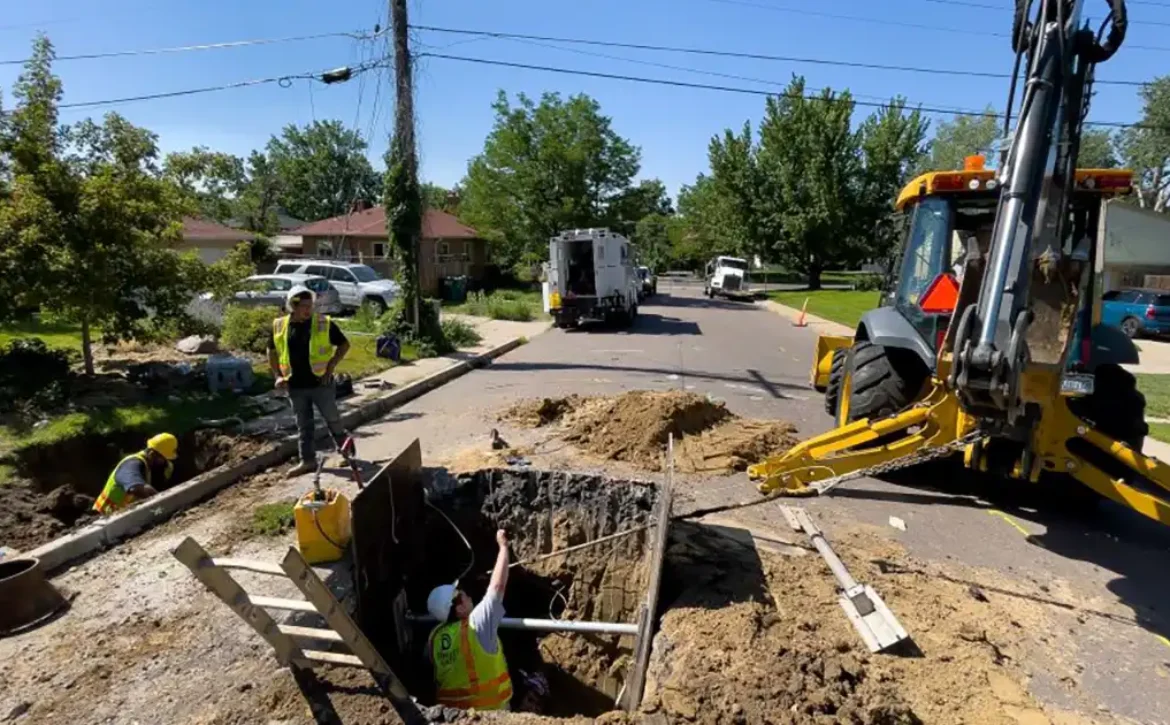
Denver Water uses a neighborhood replacement approach to optimize contractor scheduling and construction. The utility also prioritized neighborhoods based on numerous factors such as disadvantaged neighborhoods, socioeconomic indicators, and areas with high concentrations of schools, childcare facilities, and expecting families.

The City of Newark leveraged batch processing of permits for entire streets or neighborhoods as an effective strategy to reduce time spent by contractors to arrange approval prior to starting work.

The City of Newark sped up contractor timelines, advertised multiple contracts close together to lower costs, and issued varied contract sizes to support local small firms.
